What This Pattern Actually Shows
Anatomy of a candlestick ka matlab hai candle ke har hissa ko alag se samajhna: body, upper wick, lower wick, open aur close. Jab tak structure clear nahi hoga, pattern reading superficial rahegi. Body tells final control, wick tells failed attempt, aur total range tells session intensity. Yehi building blocks later pattern interpretation me use hote hain. Candlestick anatomy samajhkar beginner candle ko live story ki tarah dekhna start karta hai, not just shape ki tarah.
How This Pattern Forms
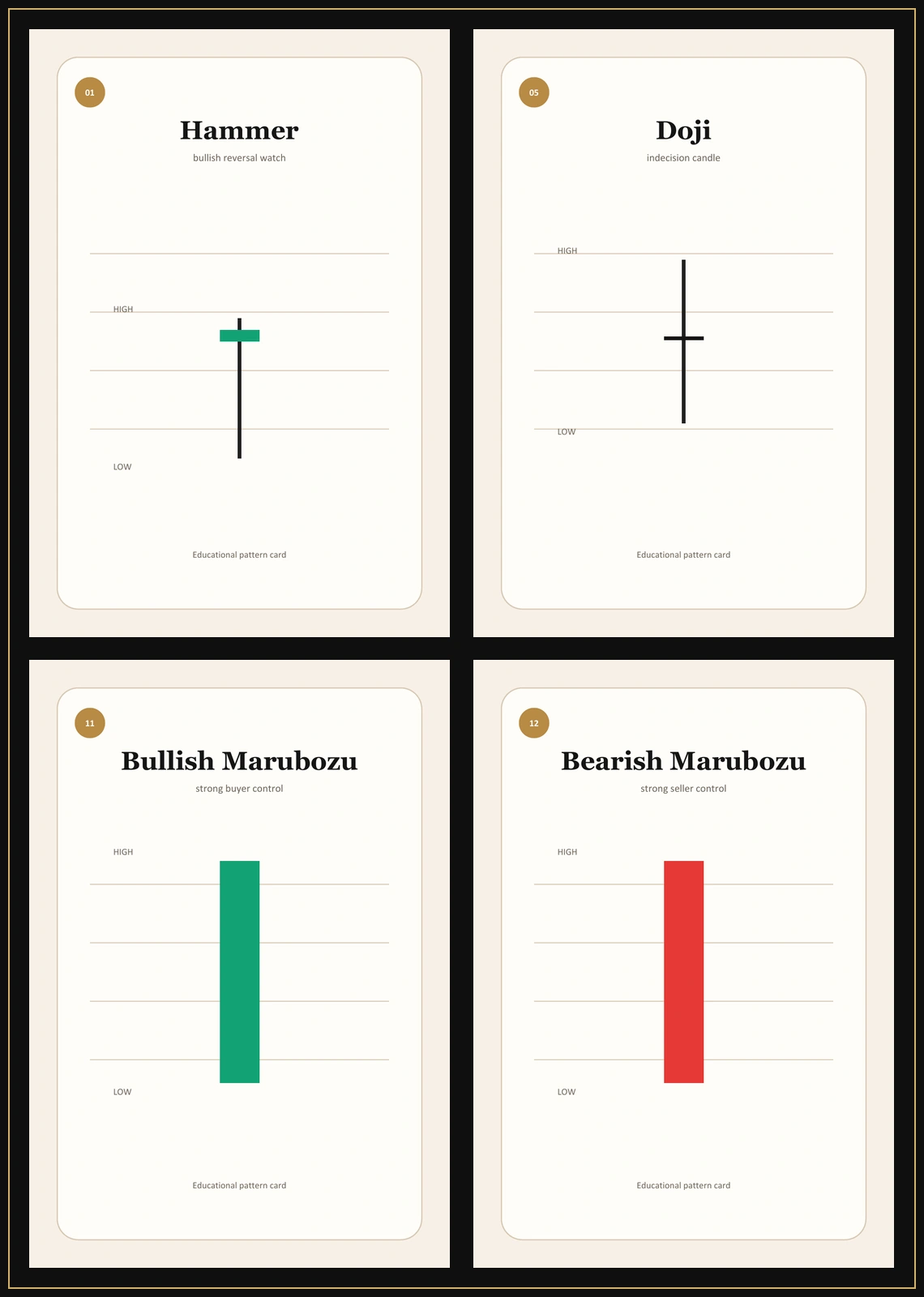
Candle form tab hoti hai jab price session ya timeframe ke andar open se move karke high-low range banata hai aur finally close deta hai. Open aur close ke beech ka distance body banata hai. Open ke upar close ho to bullish body, open ke neeche close ho to bearish body. High aur low ke bahar nikli lines wicks ya shadows hoti hain. Agar body chhoti aur wick lambi ho, to message body-dominant candle se kaafi alag hota hai.
Buyer and Seller Pressure
Large body usually stronger one-side conviction dikhati hai. Long lower wick batati hai sellers ne push kiya but buyers ne absorb kiya. Long upper wick opposite rejection dikhati hai. Candle ka close especially important hai, kyunki end me kis side ne ground hold kiya woh usse clear hota hai. Same anatomy different trend context me different meaning de sakti hai, isliye structure + location ko saath me padho.
How Beginners Should Use It Practically
Beginner ko har candle dekhkar teen questions poochhne chahiye: body kaisi hai, wick kis side lambi hai, aur close range ke kis part me aaya hai. Isse quick behavioural read milta hai. Support-resistance ke paas anatomy aur useful ho jati hai, kyunki rejection ya control visibly stronger interpret hota hai. Practical chart reading me candle anatomy se hi stop placement aur confirmation logic better banta hai.
Common Mistakes Beginners Make
Sabse common mistake sirf candle color dekhna hai. Green candle hamesha bullish quality nahi batati, aur red candle hamesha strong selling pressure nahi batati. Doosri mistake wick ko ignore karna hai, jabki rejection often wahi show hota hai. Teesri mistake body size ko previous candles se compare na karna hai. Anatomy ko context se alag padhne par candle message incomplete reh jata hai.
Most Beginners Miss This
Body aur wick ko alag-alag dekhna enough nahi hota. Real message tab aata hai jab aap close position ko poori range ke context me read karte ho.
Seedha Samjho
Candlestick anatomy important hoti hai kyunki body aur wick story ke alag parts batati hain. Ek dikhati hai price finally kahan close hui, aur doosri dikhati hai price kahan tak gayi lekin hold nahi kar paayi.
Candle future predict nahi karti. Yeh sirf itna dikhati hai ki us period ke andar price ne pressure, rejection, indecision ya momentum kaise show kiya.
Pattern strongest tab hota hai jab yeh important zone par bane aur next evidence uske message ko support kare.
Ek aur practical point yeh hai ki anatomy of a candlestick ko sirf ek ideal textbook image se nahi, multiple examples se study karna chahiye. Real charts messy hote hain, isliye pattern quality ko usually perfect yes-or-no label ke bajay spectrum par judge kiya jata hai.
Real Chart-Reading Situation
Resistance ke paas long upper wick rejection ka hint de sakti hai, lekin yeh hint tabhi stronger hota hai jab next candle weakness confirm kare ya volume dikhaye ki sellers ne us zone par response diya.
Chart read karte waqt candle ko akela mat dekho. Pehle check karo ki yeh trend ke saath hai ya against, nearby support-resistance kya hai, aur kya next candle ne follow-through diya.
Entry, stop-loss aur target ko educational example ki tarah hi dekho. Pattern achha dikhne se trade automatically good nahi ho jata.
Ek useful chart-reading habit yeh hai ki candle ko usse pehle wali candles ke saath compare karo. Is comparison se pata chalta hai ki current bar really behavior change dikha rahi hai ya sirf same noise ko different shape me repeat kar rahi hai.
False Signal Warning
Common mistake yeh hai ki sirf body color par focus kiya jata hai. Wick ki shape, range ka size aur chart par candle ki location bhi utni hi important hoti hai.
False signals tab zyada milte hain jab traders mid-candle act karte hain, low-volume move ko real breakout samajh lete hain, ya reward space dekhne se pehle hi entry le lete hain.
Beginners ko especially candle close, next-candle confirmation aur invalidation level par dhyan dena chahiye.
Chart context hi decide karta hai ki candle useful clue hai ya sirf random shape. Beginners tab faster improve karte hain jab woh exact level mark karte hain jahan candle idea fail hota hai, kyunki invalidation vague pattern interest ko clear risk decision me convert kar deta hai.
How To Combine It With Real Decision-Making
Anatomy better invalidation logic build karne me help karti hai. Agar rejection wick hi setup ka main reason hai, to stop-loss ko sirf candle body nahi, poore rejection zone ko respect karna chahiye.
Better chart-reading ke liye is pattern ko trend, support-resistance, volume aur risk management ke saath combine karo. Jitna structured framework hoga, utna candle ka message zyada clearly samajh aayega.
No-trade decision bhi valid decision hota hai. Agar context weak ho ya stop-loss awkward ho, to pattern dekhkar bhi skip karna smart ho sakta hai.
Yeh educational examples aur actual setups ko alag karne me bhi help karta hai. Agar candle ko logical stop-loss aur realistic target space ke saath connect hi nahi kiya ja sakta, to woh study ke layak ho sakti hai, lekin zaroori nahi ki trade ke layak bhi ho.
Quick FAQs
Yeh candlestick pattern actually kya dikhata hai?
Candlestick anatomy important hoti hai kyunki body aur wick story ke alag parts batati hain. Ek dikhati hai price finally kahan close hui, aur doosri dikhati hai price kahan tak gayi lekin hold nahi kar paayi.
Real chart me beginner isse kaise use kare?
Resistance ke paas long upper wick rejection ka hint de sakti hai, lekin yeh hint tabhi stronger hota hai jab next candle weakness confirm kare ya volume dikhaye ki sellers ne us zone par response diya.
Is pattern ke saath common beginner mistake kya hota hai?
Common mistake yeh hai ki sirf body color par focus kiya jata hai. Wick ki shape, range ka size aur chart par candle ki location bhi utni hi important hoti hai.
Sirf ek candle enough kyun nahi hoti?
Anatomy better invalidation logic build karne me help karti hai. Agar rejection wick hi setup ka main reason hai, to stop-loss ko sirf candle body nahi, poore rejection zone ko respect karna chahiye.
Disclaimer
Yeh page sirf educational purpose ke liye hai. Koi bhi candlestick pattern guaranteed reversal, guaranteed continuation, ya guaranteed profit signal nahi hota.