What Price Action Trading Really Means
Price action trading ka matlab hai raw chart behaviour ko padhna without overdependence on indicators. Ismein candles, swings, breakouts, rejections, pullbacks, aur market structure ke through decision liya jata hai.
Indicator-free hona price action ka core point nahi hai. Core point yeh hai ki aap price ko primary evidence treat karte ho. Indicators supportive ho sakte hain, but decision price behaviour aur context ke around build hota hai.
Price action trader market se yeh sawal poochta hai: level par response kaisa hai, momentum kis side hai, aur invalidation kahan hai?
How Price Action Builds a Trade Idea
Suppose stock uptrend mein hai aur previous breakout zone par pullback karta hai. Price action trader dekhega kya candles rejection dikhati hain, kya lower timeframe higher low bana raha hai, kya bounce controlled way mein aa raha hai. Agar haan, long setup stronger lag sakta hai.
Range market mein price action alag behave karta hai. Wahan false break, rejection wick, aur range acceptance more relevant ho sakte hain. Isliye same candle ka meaning environment ke saath badalta hai.
Price action ka major strength yeh hai ki yeh trader ko directly market behaviour se connect karta hai, pre-packaged signals se nahi.
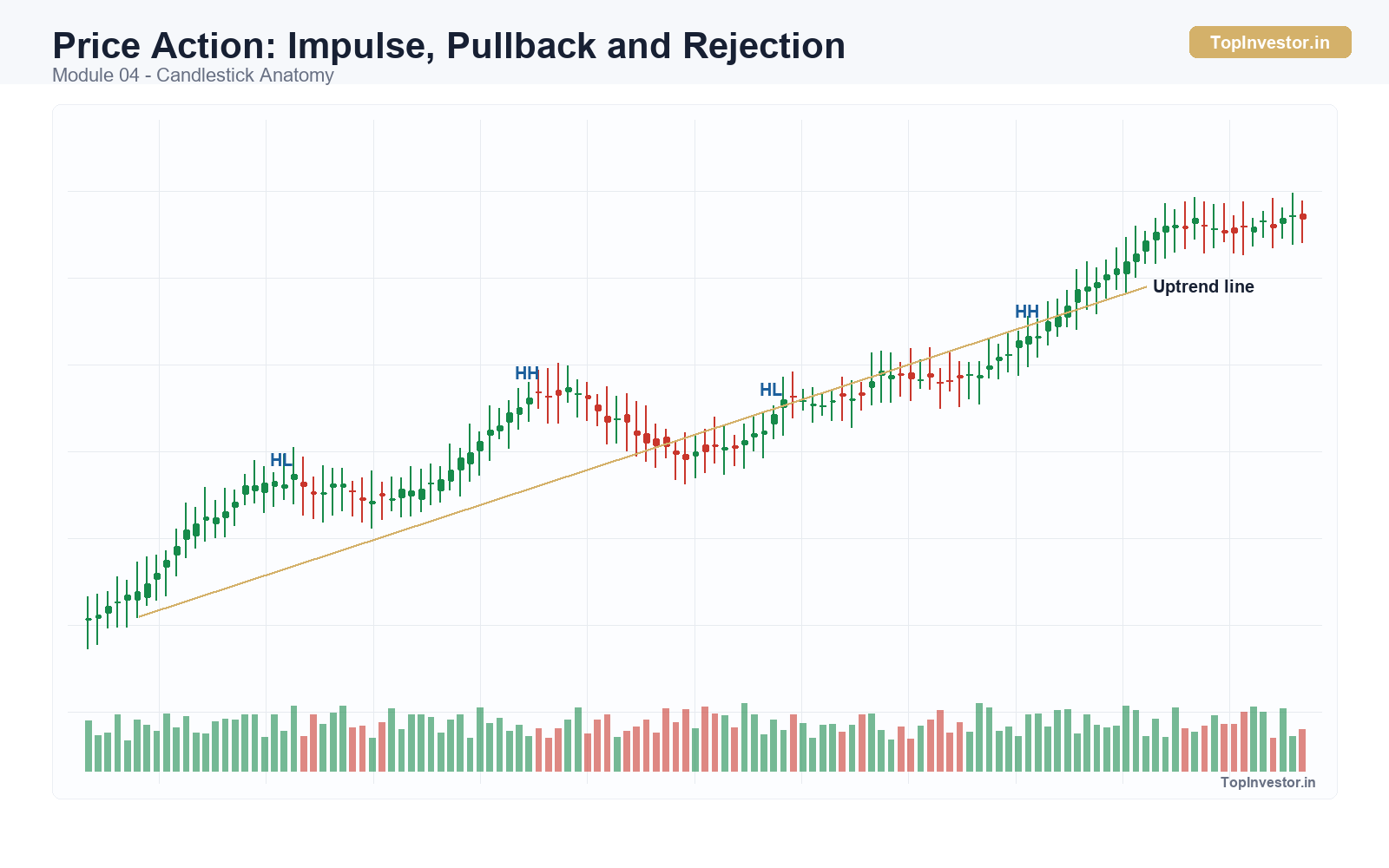
Price Action Impulse Pullback and Rejection
Important Building Blocks of Price Action
Key levels, structure, momentum candles, pullback quality, breakout acceptance, aur failed moves price action ke main building blocks hain. In sab ko combine karke chart story banti hai.
Agar breakout aaye but immediate rejection aur weak close mile, price action caution deta hai. Agar support test ho aur har test par rejection quick aaye, demand visible ho sakti hai. Yeh nuanced reading beginners ko time ke saath develop karni hoti hai.
Best part yeh hai ki price action stop-loss logic naturally create karta hai because invalidation usually visible hota hai.
Common Price Action Misunderstandings
Beginners price action ko mystical skill samajh lete hain. Actually yeh observation discipline hai. Structure aur level clear ho to price action reading practical ban jati hai.
Doosri mistake indicator hatakar pure random discretion start kar dena hai. Price action ka matlab no rules nahi hota. Rules aur process aur bhi important ho jate hain.
Third mistake har candle ko narrative banana hai. Price action ka goal overinterpret karna nahi, high-signal behaviour identify karna hai.
Most Beginners Miss This
Price action trading ka real edge simplicity mein nahi, selectivity mein hota hai. Har visible move readable ho sakta hai, lekin har readable move tradable nahi hota.
Seedha Samjho
Price action trading ka matlab hai decision-making mein price behaviour ko primary evidence banana, instead of indicators par blind rely karna.
Is concept ka use chart reading ko clearer banane ke liye karo, complicated banane ke liye nahi. Ek clean idea with proper context, aksar dus conflicting signals se better hota hai.
Real Chart Mein Iska Practical Use
Isi liye experienced traders process ko simplify karte hain. Unka focus weak information hata kar sirf un factors par rehna hota hai jo execution ko genuinely better banate hain.
Practical use mein trader swings, rejection candles, pullback quality, breakout acceptance aur failed moves padhta hai taaki samajh sake market participation invite kar raha hai ya warning de raha hai.
Practical test simple hai: setup dekhne ke baad pucho kya chart ab bhi space, confirmation aur logical trade location de raha hai. Agar nahi, to setup educational ho sakta hai, tradable zaroori nahi.
Price action ka practical edge tab dikhta hai jab aap dekhte ho ki level par actual response kaisa hai: rejection fast hai ya slow, breakout accept hua ya fail, pullback healthy hai ya messy. Yeh nuance hi screenshot reading ko live decision-making se alag karta hai.
Most Beginners Miss This
Yahi step chart reading ko random button-clicking se alag karta hai. Setup tabhi attention deserve karta hai jab evidence, timing aur location ek saath align ho.
Risk Management Se Connection
Most Beginners Miss This: price action koi mystical art nahi hai. Yeh levels ke aas-paas behaviour padhne ka structured tareeka hai, jisme discipline aur repeatable rules chahiye hote hain.
Price action ki strength yeh hai ki yeh invalidation naturally reveal karta hai. Agar market woh level hold hi nahi karta jisse aapka idea define hua tha, to thesis jaldi weak ho jata hai.
Technical setup tab stronger hota hai jab stop-loss structure se aaye aur target realistic chart space se. Isse reward-to-risk emotional hone ke bajay grounded rehta hai.
Strong setup bhi fail ho sakta hai, lekin well-planned setup aksar controlled tareeke se fail hota hai. Trading mein yeh difference bahut important hota hai.
Price action ko intuition ke naam par rule-less mat banao. Agar trigger, invalidation aur stop-loss pehle se define nahi hain, to discretionary freedom jaldi emotional risk mein badal sakti hai.
Quick FAQs
Is topic ko sabse simple tareeke se kaise samjhein?
Price action trading ka matlab hai decision-making mein price behaviour ko primary evidence banana, instead of indicators par blind rely karna. Pehle clarity lao, phir speed.
Beginner ise live chart par kaise use kare?
Practical use mein trader swings, rejection candles, pullback quality, breakout acceptance aur failed moves padhta hai taaki samajh sake market participation invite kar raha hai ya warning de raha hai. Agar chart confirmation ya move ka room nahi de raha, to wait karna aksar better decision hota hai.
Yahan beginners sabse zyada kya galat samajhte hain?
Most Beginners Miss This: price action koi mystical art nahi hai. Yeh levels ke aas-paas behaviour padhne ka structured tareeka hai, jisme discipline aur repeatable rules chahiye hote hain. Yehi ek insight beginners ko low-quality entries se kaafi bachata hai.
Yeh risk management se kaise connect hota hai?
Price action ki strength yeh hai ki yeh invalidation naturally reveal karta hai. Agar market woh level hold hi nahi karta jisse aapka idea define hua tha, to thesis jaldi weak ho jata hai. Achhi analysis tabhi tradable banti hai jab risk clearly defined ho.
Disclaimer
Yeh page sirf educational purpose ke liye hai. Koi bhi pattern, indicator, breakout, ya setup guaranteed profit nahi deta. Isse financial advice ya trade recommendation ki tarah treat na karein.